

For years, the “Cloud” has actually lived in massive, windowless buildings on Earth. But that’s about to change.
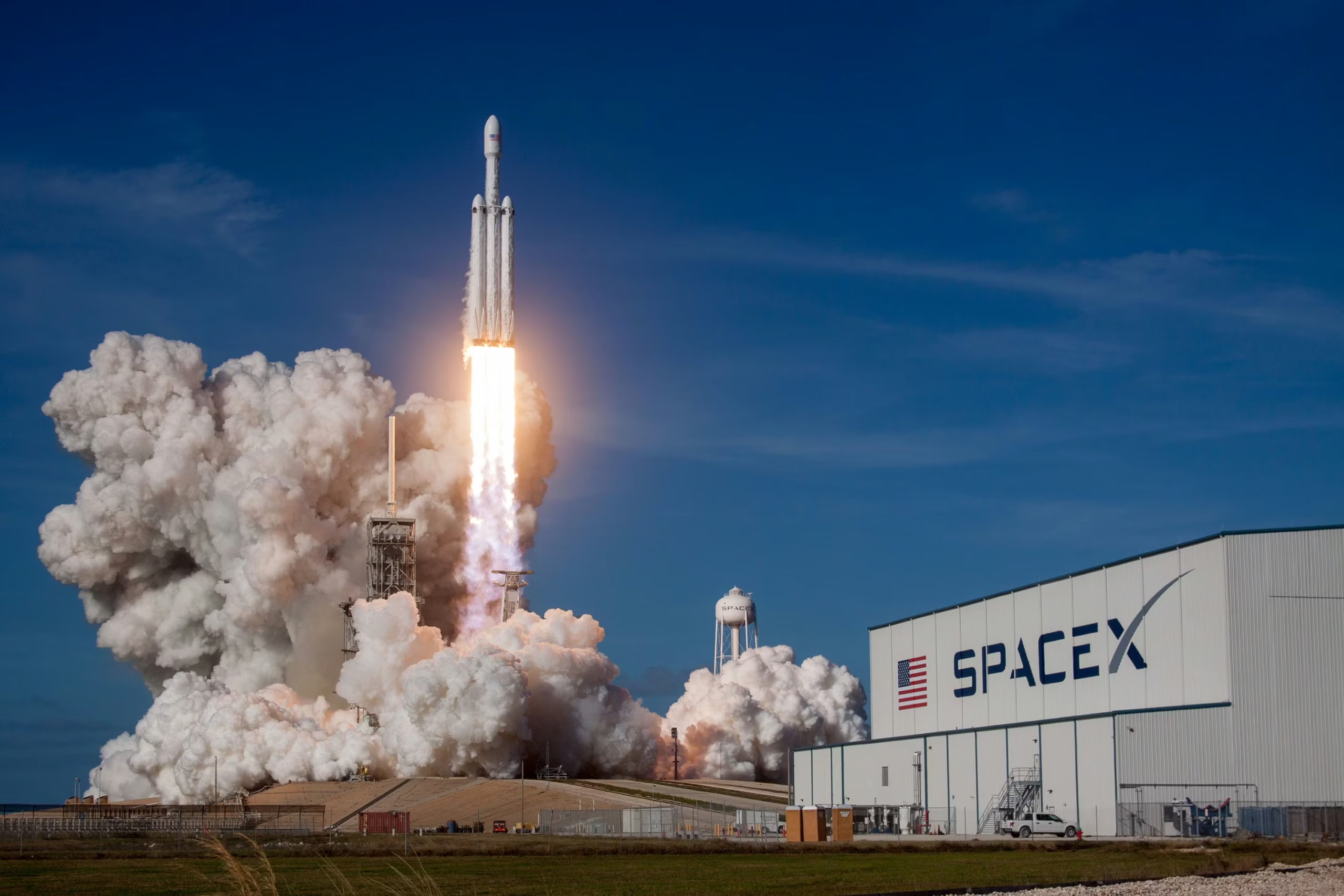
According to a bombshell report from the Wall Street Journal, Google is in talks with Elon Musk’s SpaceX to launch a new kind of infrastructure: Orbital Data Centers. As AI models grow more massive and power-hungry, Big Tech is looking for a solution that isn’t tied to Earth’s power grids or land constraints. It turns out, the answer might be 300 miles above our heads.
Why Orbit? The Problem with Earth-Based AI
AI isn’t just about code; it’s about physical resources. Training next-gen models requires a staggering amount of:
- Land: Data centers are becoming the size of small cities.
- Electricity: AI power consumption is projected to strain national grids within years.
- Cooling: Servers generate immense heat, requiring billions of gallons of water for cooling.
By moving these “server farms” into space, Google and SpaceX are exploring a radical shortcut.
Project Suncatcher: Google’s Bold New Vision
The collaboration is tied to Google’s internal initiative, dubbed Project Suncatcher. The goal? To build a network of satellites that act as high-performance AI factories.
By partnering with SpaceX, Google gains access to the world’s most cost-effective “space elevator”—the Starship rocket. Meanwhile, SpaceX has already been laying the groundwork with its own “orbital data center” filings with the FCC, making this a partnership of convenience (and necessity).
The “Space Perks”: Solar Power and Natural Cooling
There are two massive scientific advantages to putting AI in space:
- Unlimited Energy: Outside the atmosphere, solar panels can capture 24/7 sunlight without interference from weather or night cycles.
- The Ultimate Heat Sink: Cooling is one of the biggest costs on Earth. In the vacuum of space, managing heat is a different challenge, but the lack of terrestrial environmental impact makes it an attractive alternative for massive compute loads.
Is This Actually Realistic?
While the idea sounds like science fiction, the tech is closer than you think. SpaceX is already dominating low-earth orbit (LEO) with Starlink, and Google needs a way to keep its AI lead without building a thousand more power plants.
However, challenges remain. Maintenance in space is nearly impossible, and “latency” (the time it takes for data to travel from Earth to orbit and back) could be an issue for real-time applications.




Leave a Reply